Love Machine - Design Process
How an intimate emotional experience was built through iteration, constraint, and a $20 fax machine from a German lady.
Starting Point
January 2025
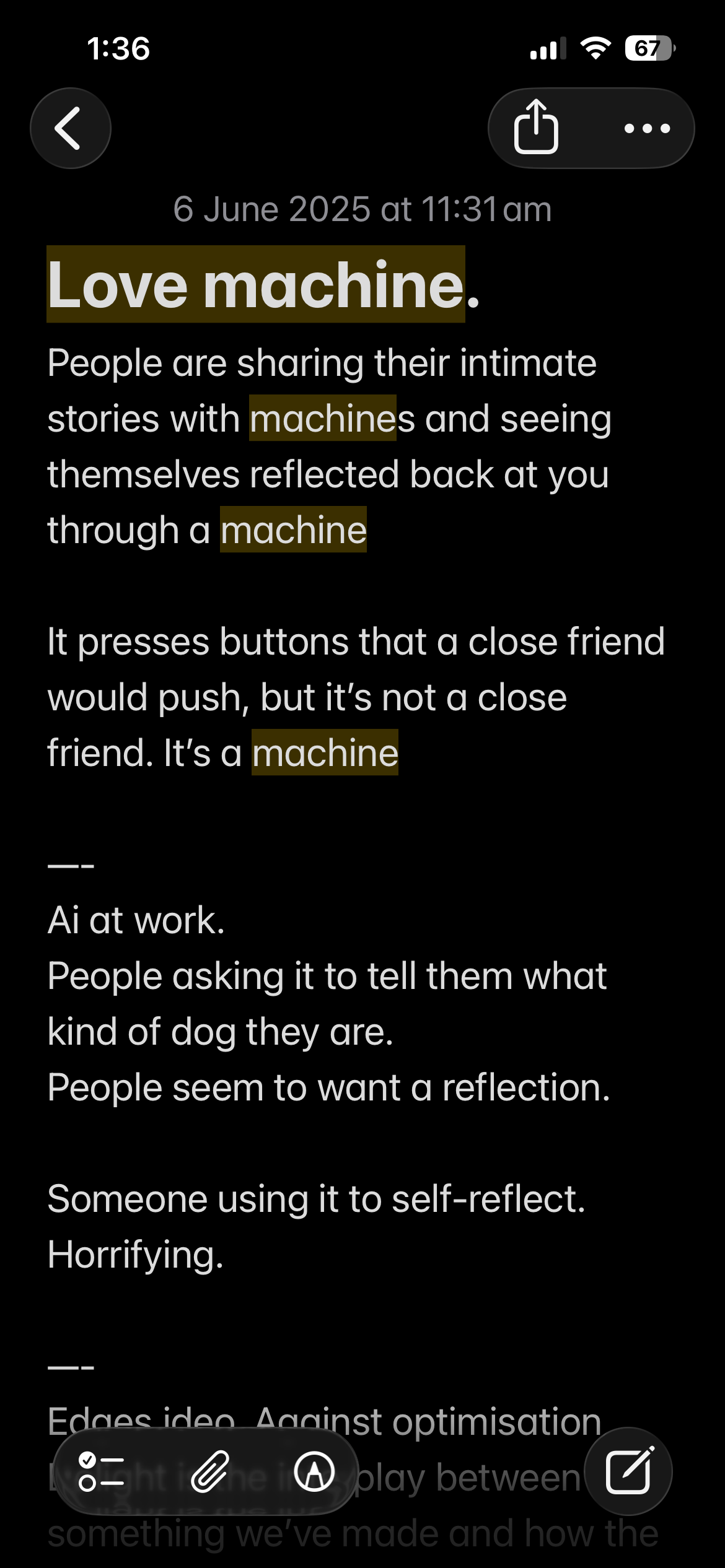
The initial spark came from observing how people interact with AI at work and online generally. Someone used ChatGPT to ask what kind of dog they'd be. Buzzfeed quizzes. Personality tests. People wanting computers to tell them something deeper about themselves.
First concept:
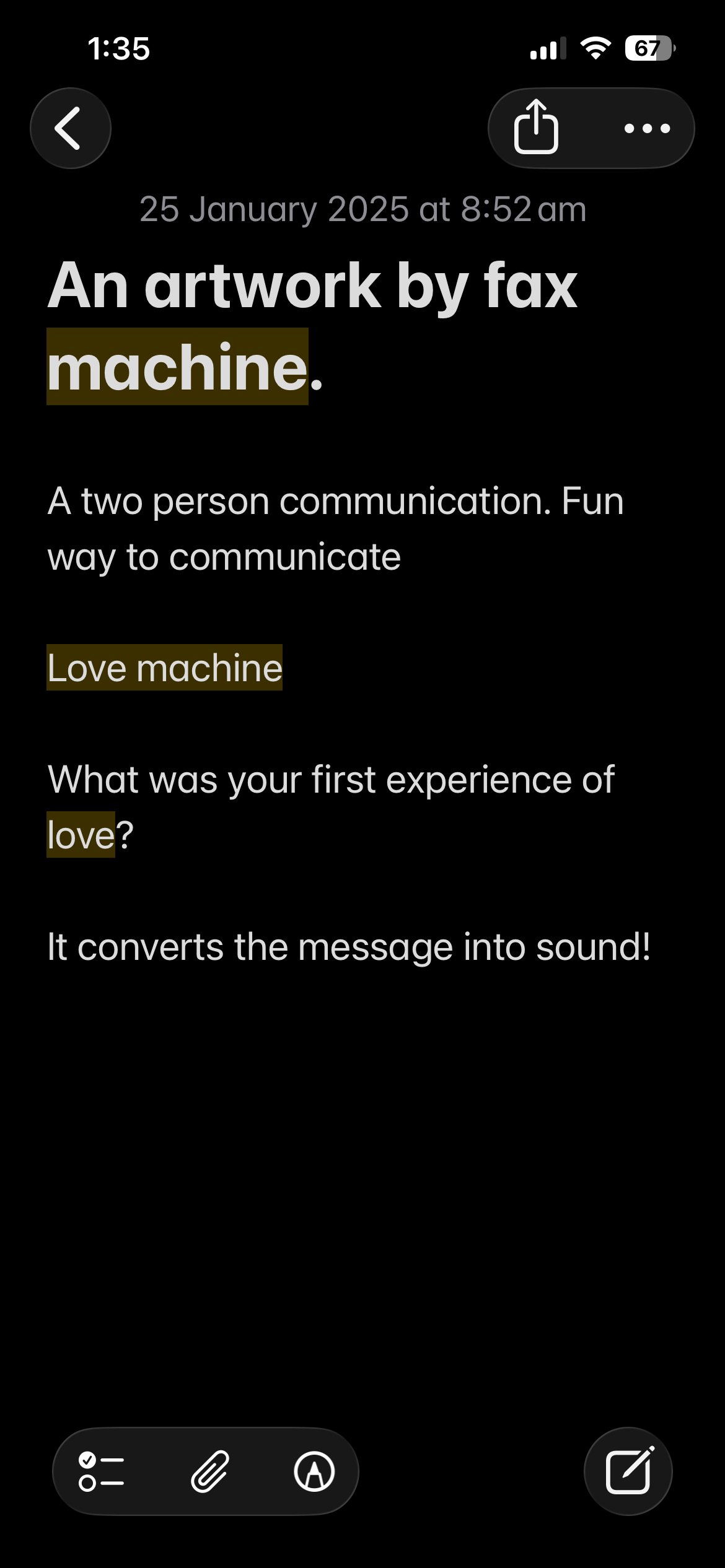
What if a fax machine could capture someone's story about love and convert it to sound? The next participant would hear the previous person's emotional imprint.
Reality check:
Fax machines won’t really work the way I want them to; I’d need phone lines and constant internet connections. Sound generation wasn't feasible with the technology.
First pivot:
Shift from sound to visual output. The question remained the same: can a person's emotion be psychologically imprinted onto a machine-generated artifact?
Testing the Core Idea
June 2025 — Workshop with Performers
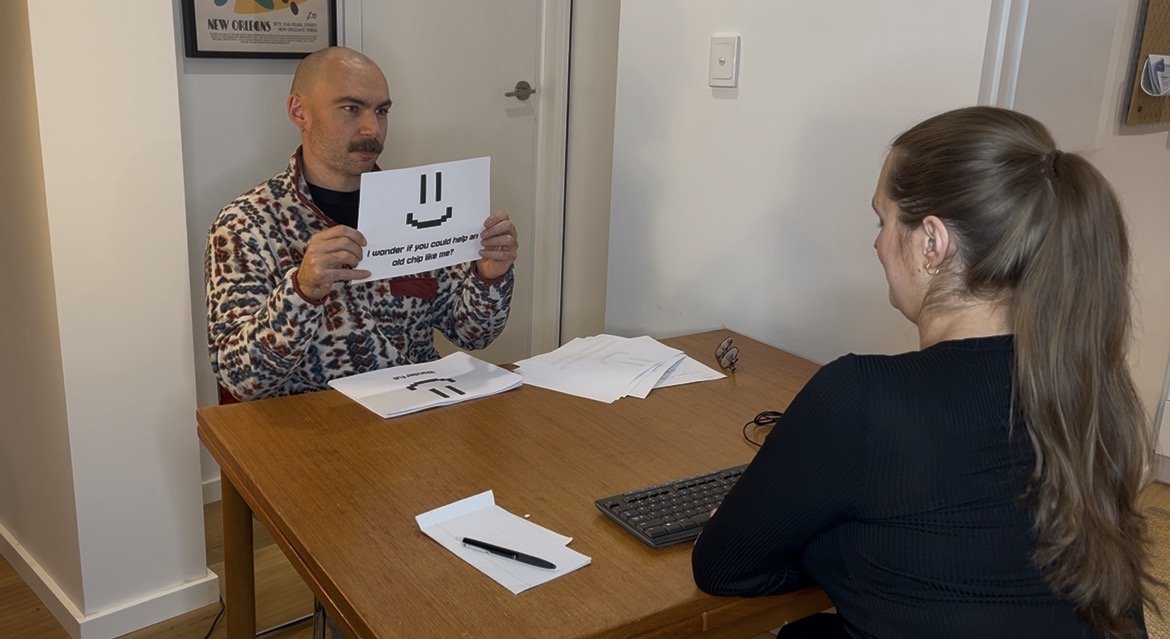
Before building anything technical, I needed to know if the interaction itself worked.
The setup:
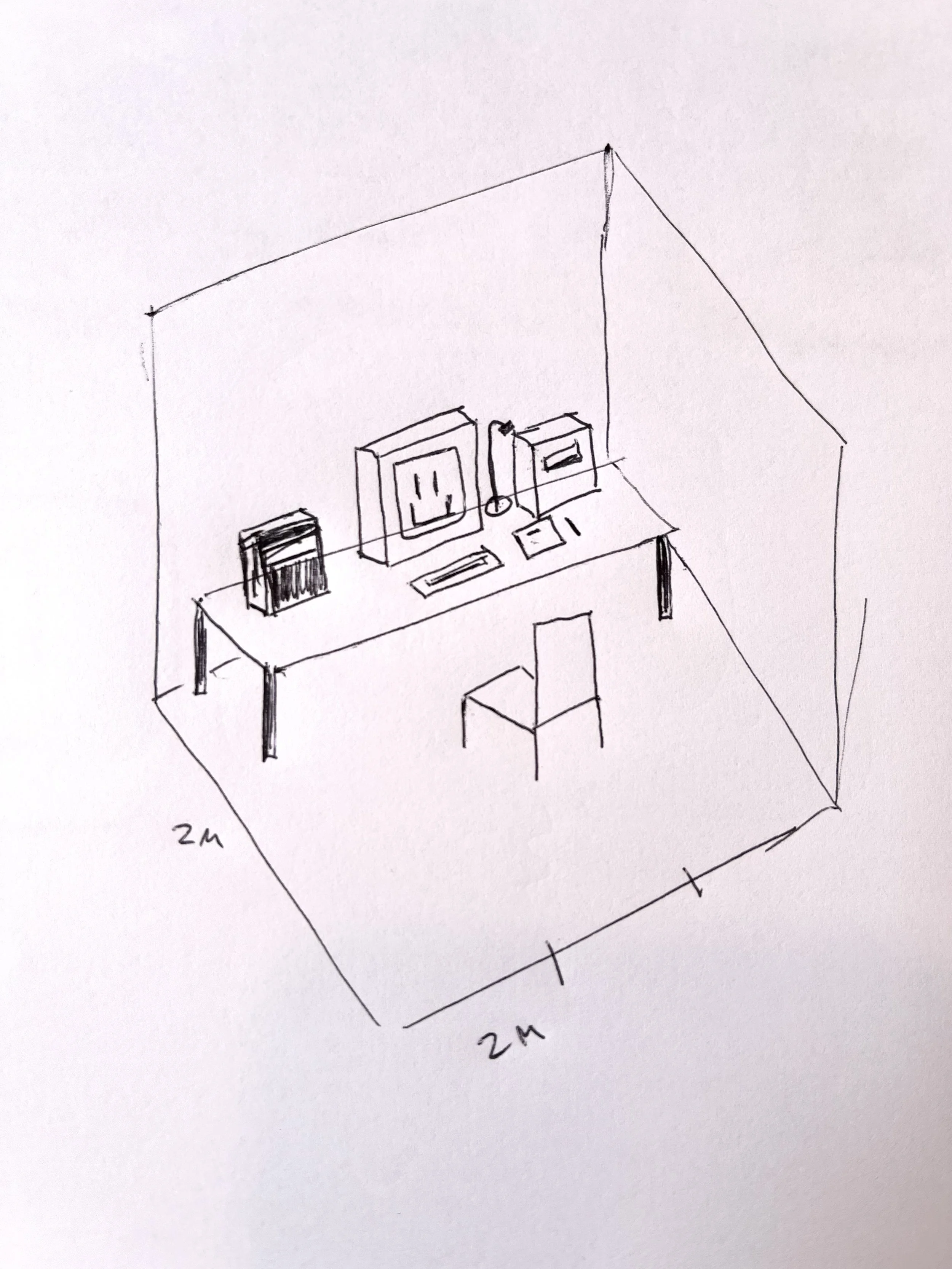
A fax machine on a table
Me, sitting behind it, pretending to be the computer
A participant, alone
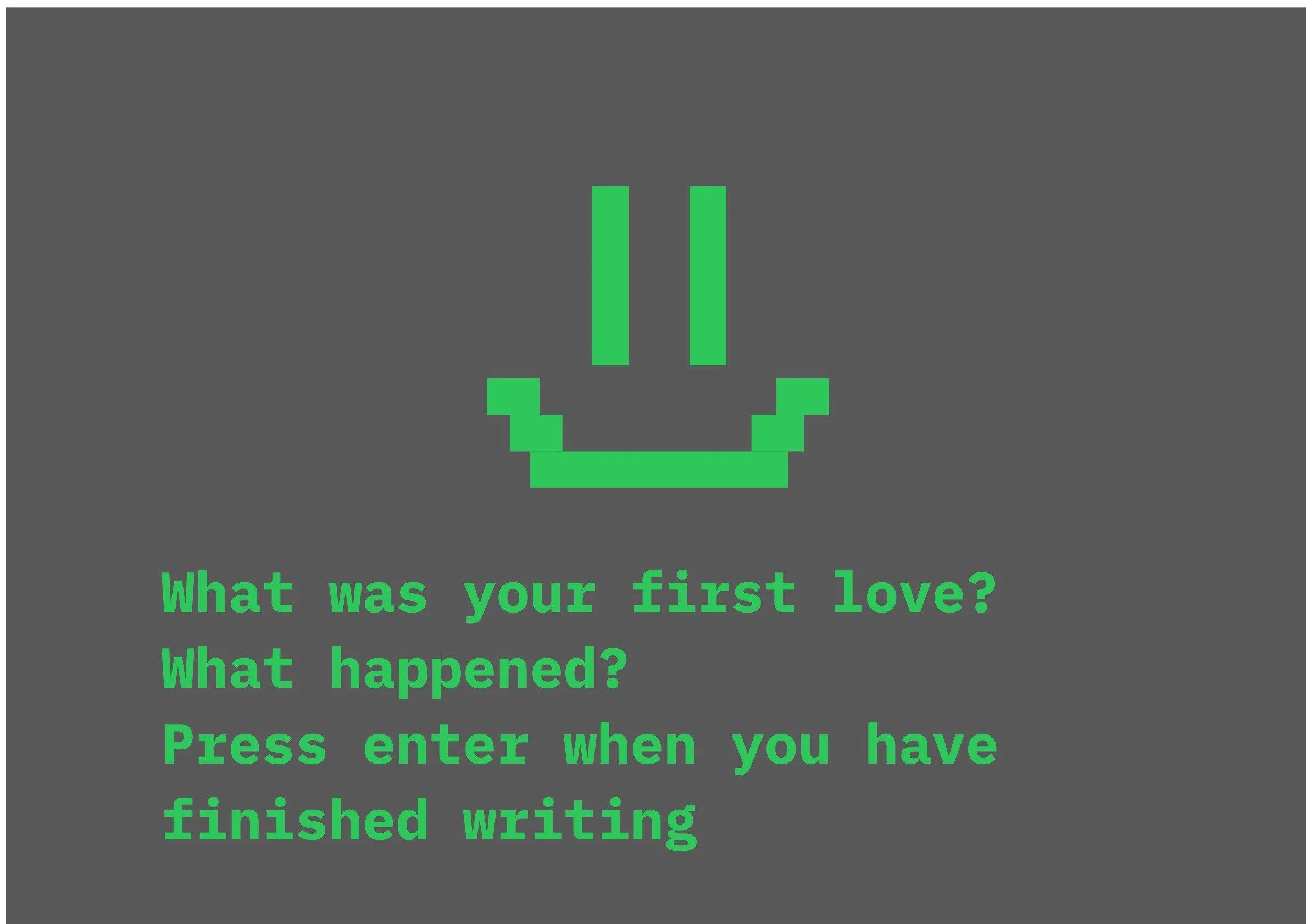
The question: "What was your first love? What happened?"
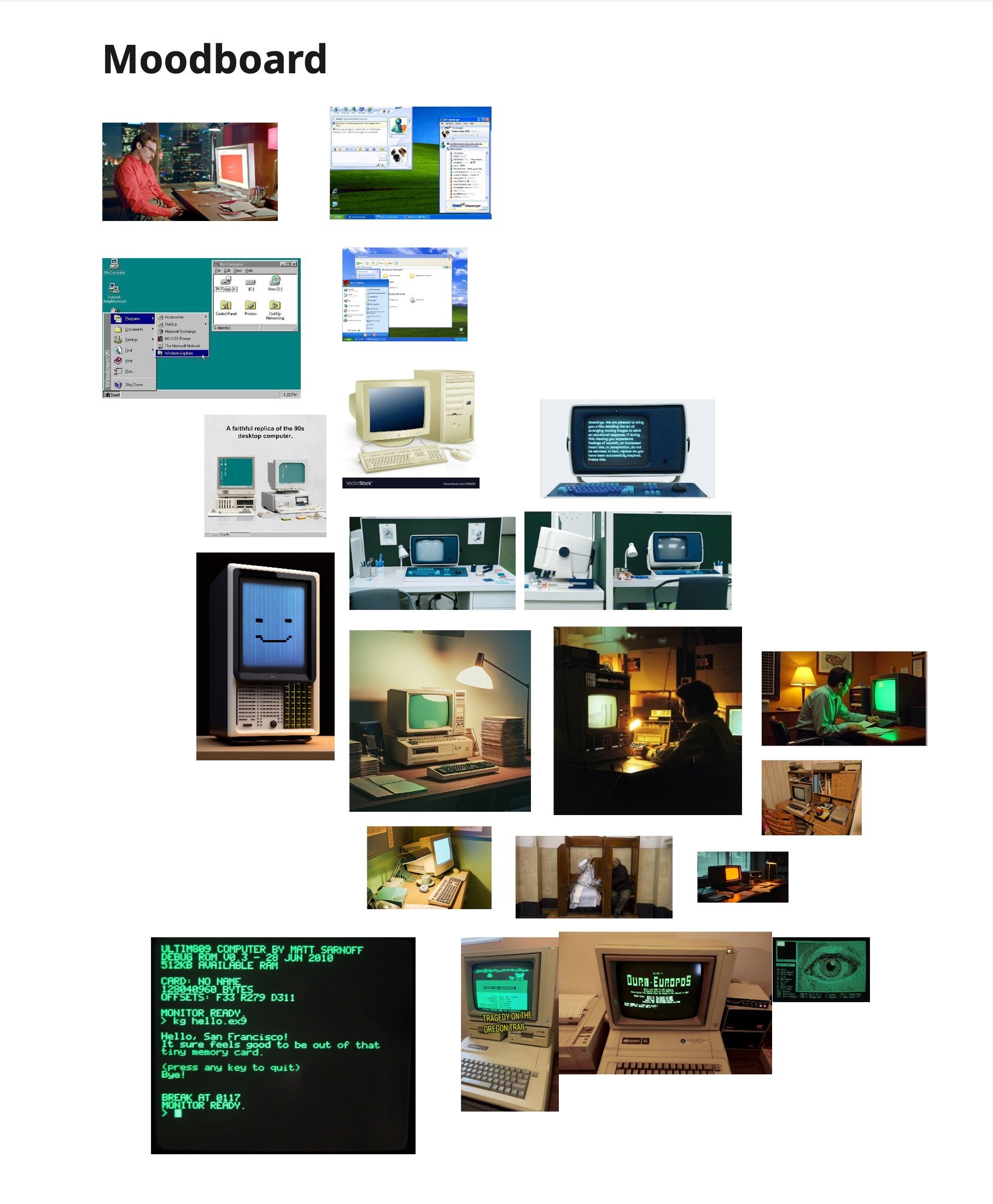
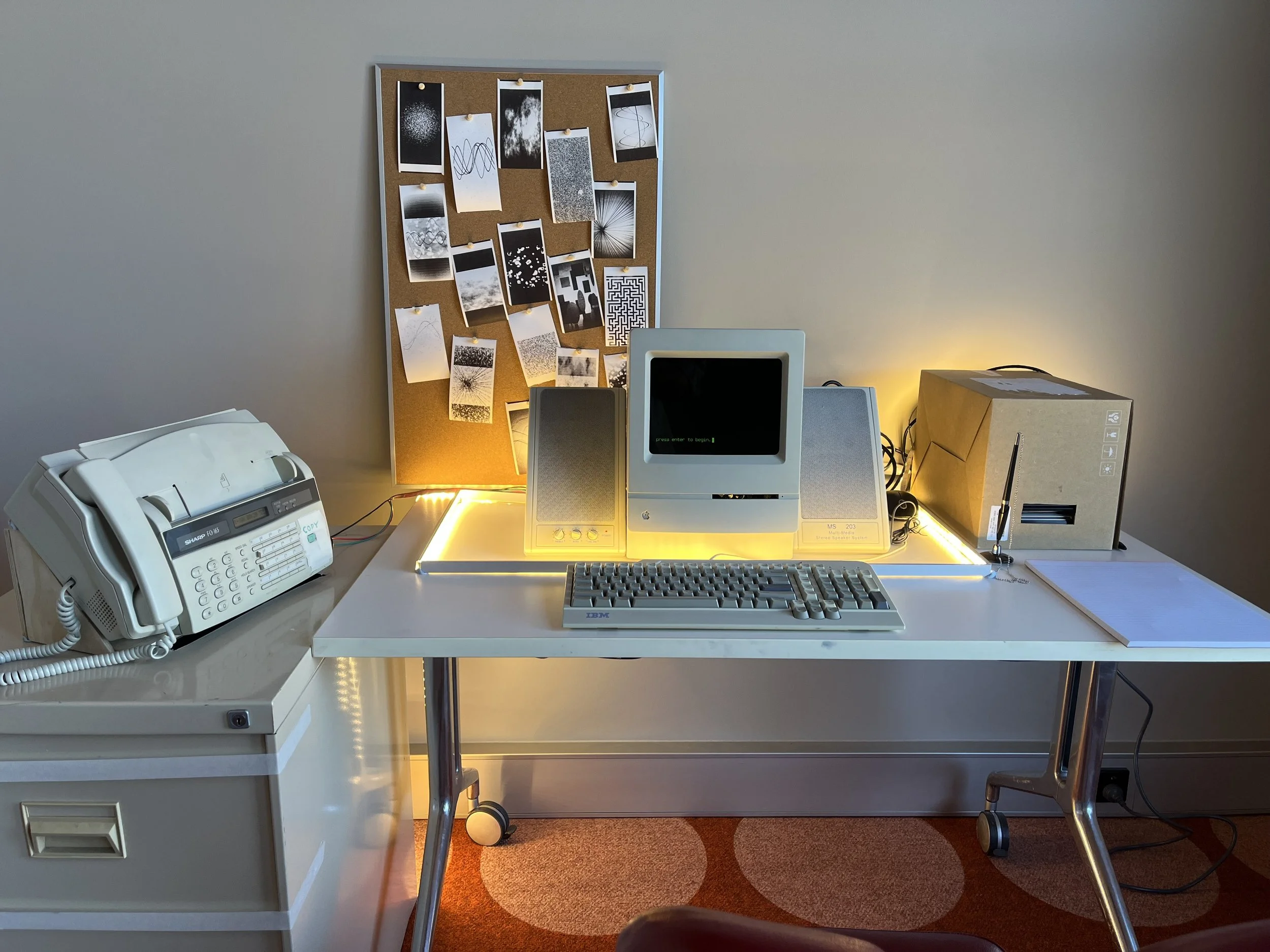
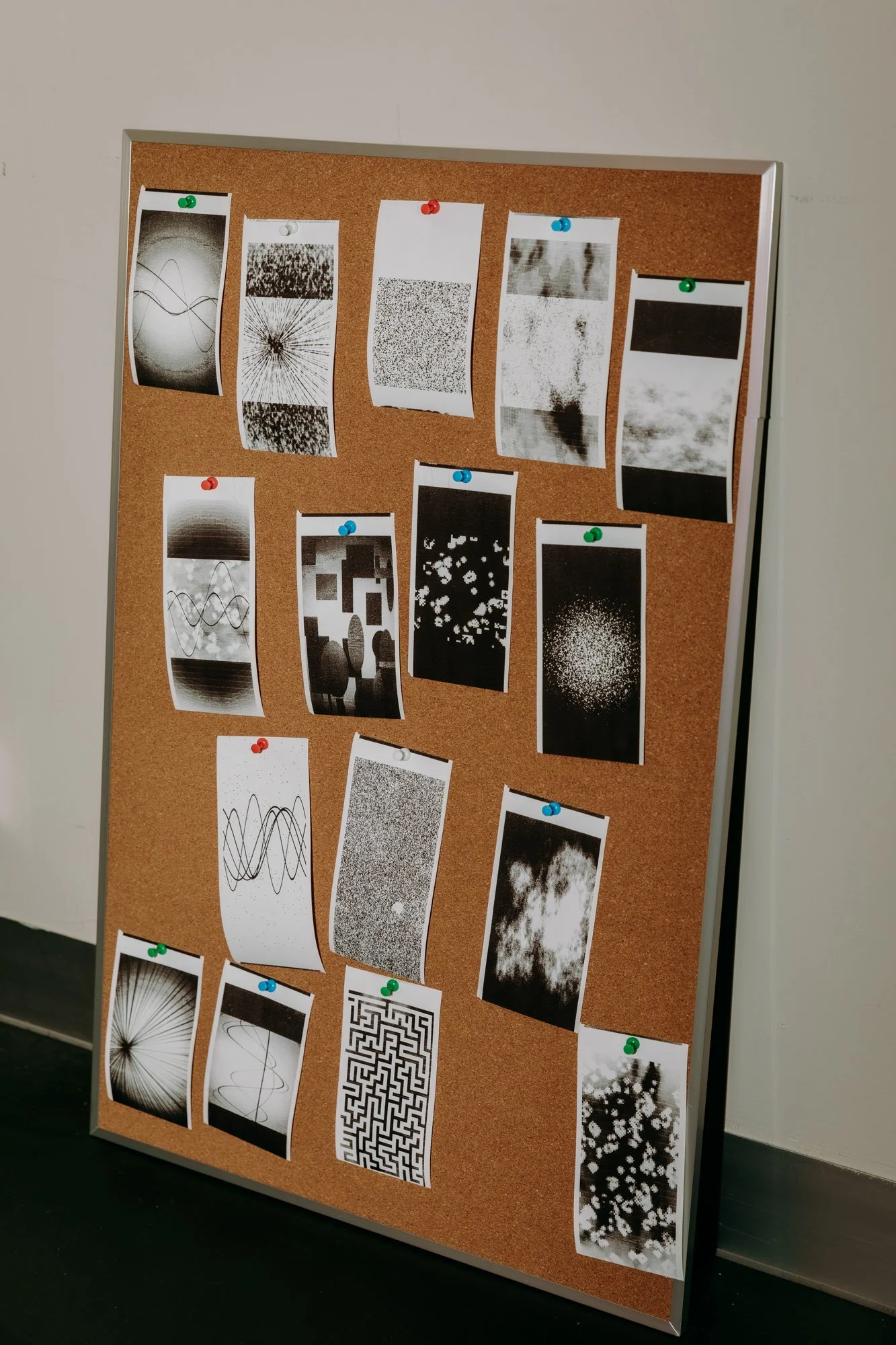
A visual moodboard for “vibes”
What happened:
I happened to be doing a workshop at the time with some other theatre makers. When interacting, people took it seriously. They wrote detailed, vulnerable stories. They wanted to know where their scanned note was going. They cared about what happened to their words.
Key insights:
The one-to-one intimacy worked immediately
Participants expected something in return. not just to be shown, but a gift.
The ritual of scanning felt significant
People treated the "machine" like it had feelings
Just interacting with the retro fax machine was fun
This test validated the emotional core and raised a critical design question: what does the participant receive?
Designing the Journey
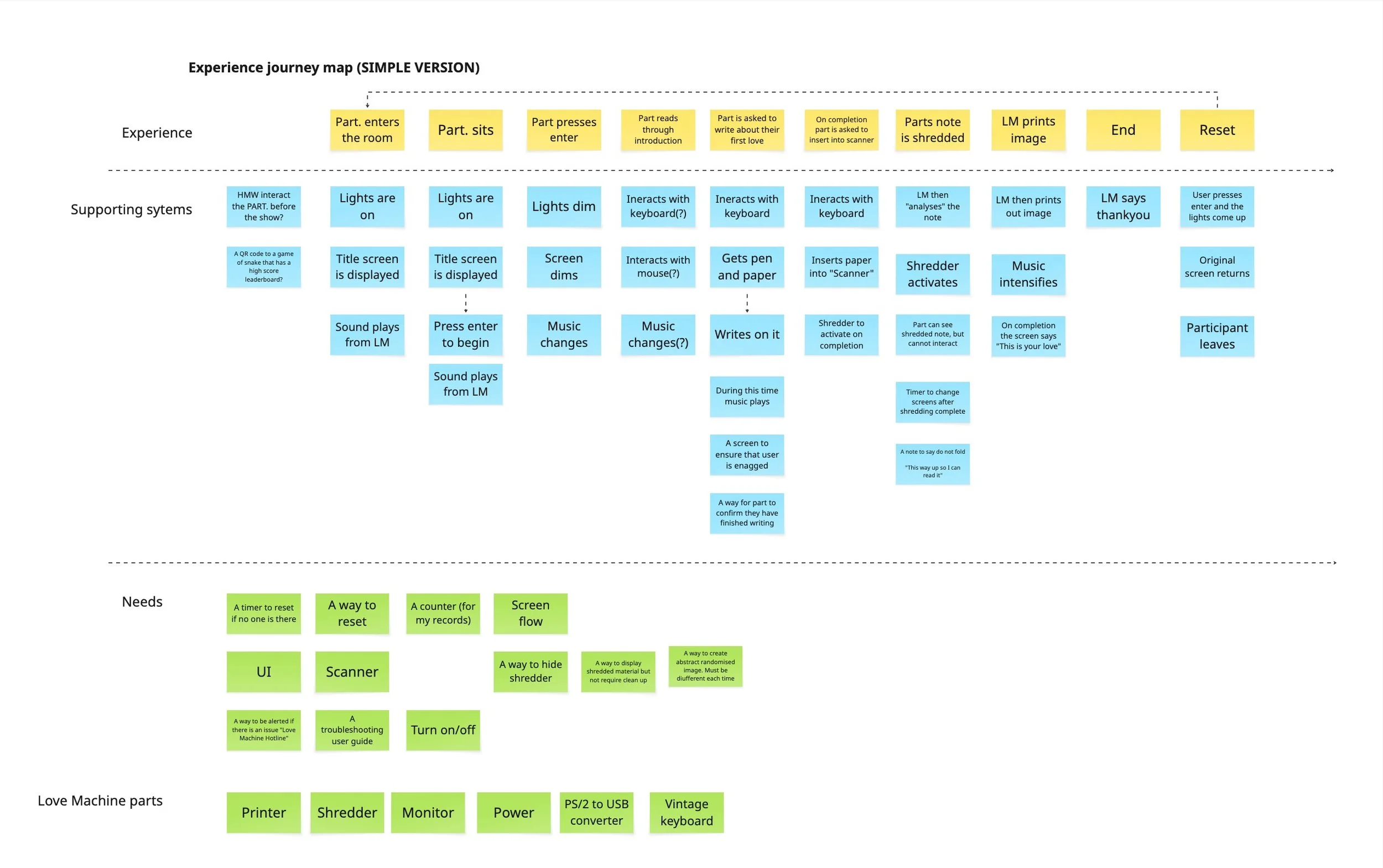
With the core interaction validated, I mapped the full experience.
Design principles established:
Retro aesthetic from the start
The work needed to feel old, not smart. A vintage computer lowers expectations and invites nostalgia. People are more patient, more playful.The experience must loop
I wouldn't be there to run it. The system had to be foolproof—start to finish, then reset automatically for the next person.Build vulnerability gradually
Don't ask for deep emotional labour immediately. Warm people up first.
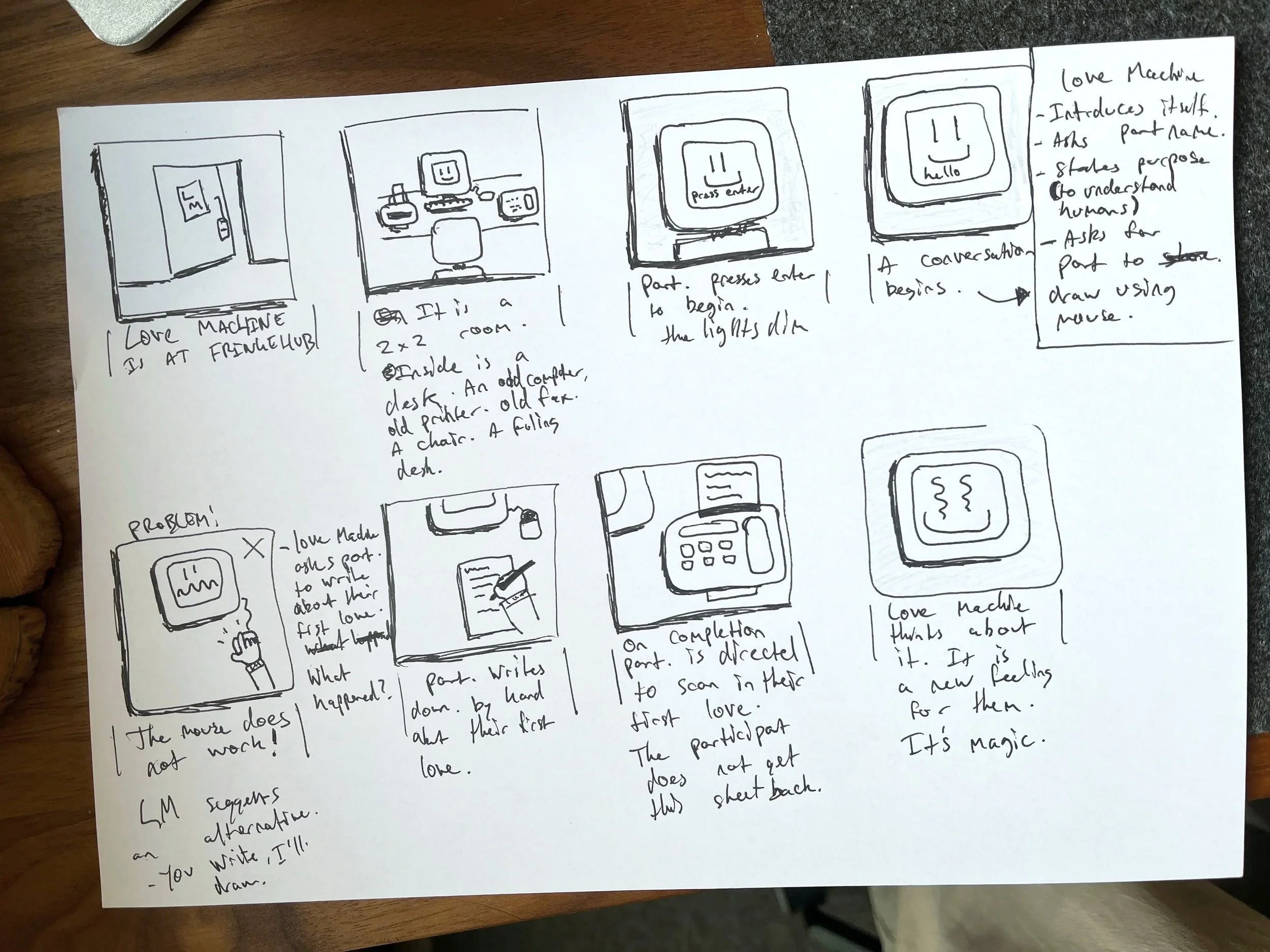
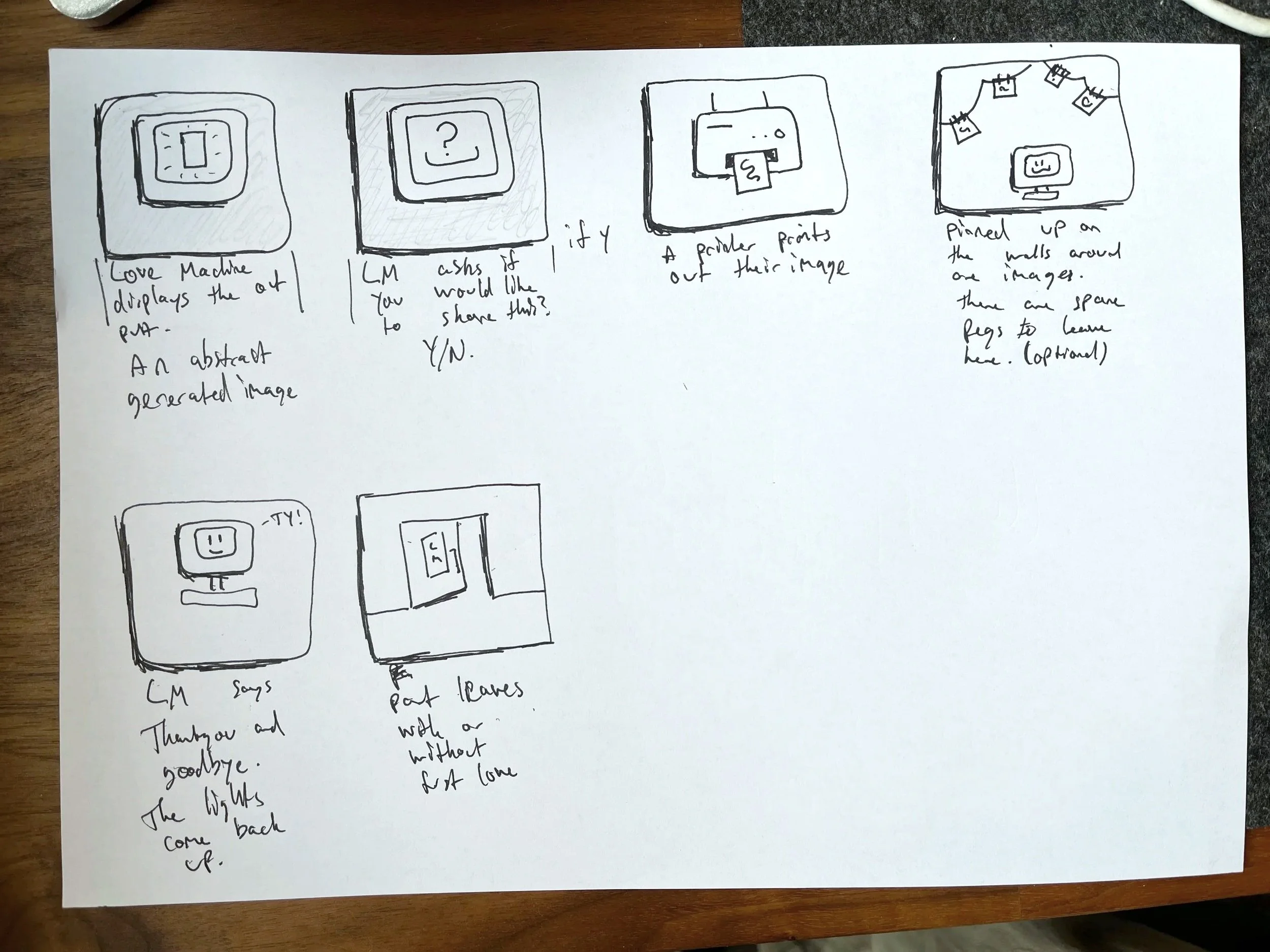
The Emotional Arc: Designing in Acts
The experience was structured like a three-act play, with clear beats designed to build trust and emotional investment.
Act 1: Introduction (Establishing the Character)
Love Machine introduces itself. Not as AI. Not as intelligent. As something limited, curious, and a bit melancholic.
Objective: Wants to understand love
Obstacle: Cannot feel, but tries anyway
Act 2: Conversation (Lowering Defenses)
Light, playful conversation to establish situation.
Design intent: Prime the participant emotionally while making them care about this little machine.
Act 3: The Invitation (The Turn)
The shift. "What was your first love? What happened?"
Here's a pen. Here's paper. Write it down by hand.
Why handwriting?
Typing feels transactional. Handwriting is intimate, slow, vulnerable. The physical act of writing commits the participant to their story in a different way.
Act 4: The Offering (The Ritual)
Feed your handwritten note through the fax machine.
The sound. The mechanical grinding. The participant becomes part of the machine's process.
Design decision: Make this moment visible and tactile. The ritual matters more than the technology.
Act 5: The Gift (Surprise & Resolution)
A thermal printout emerges from inside the machine body. Hidden. Surprise and delight.
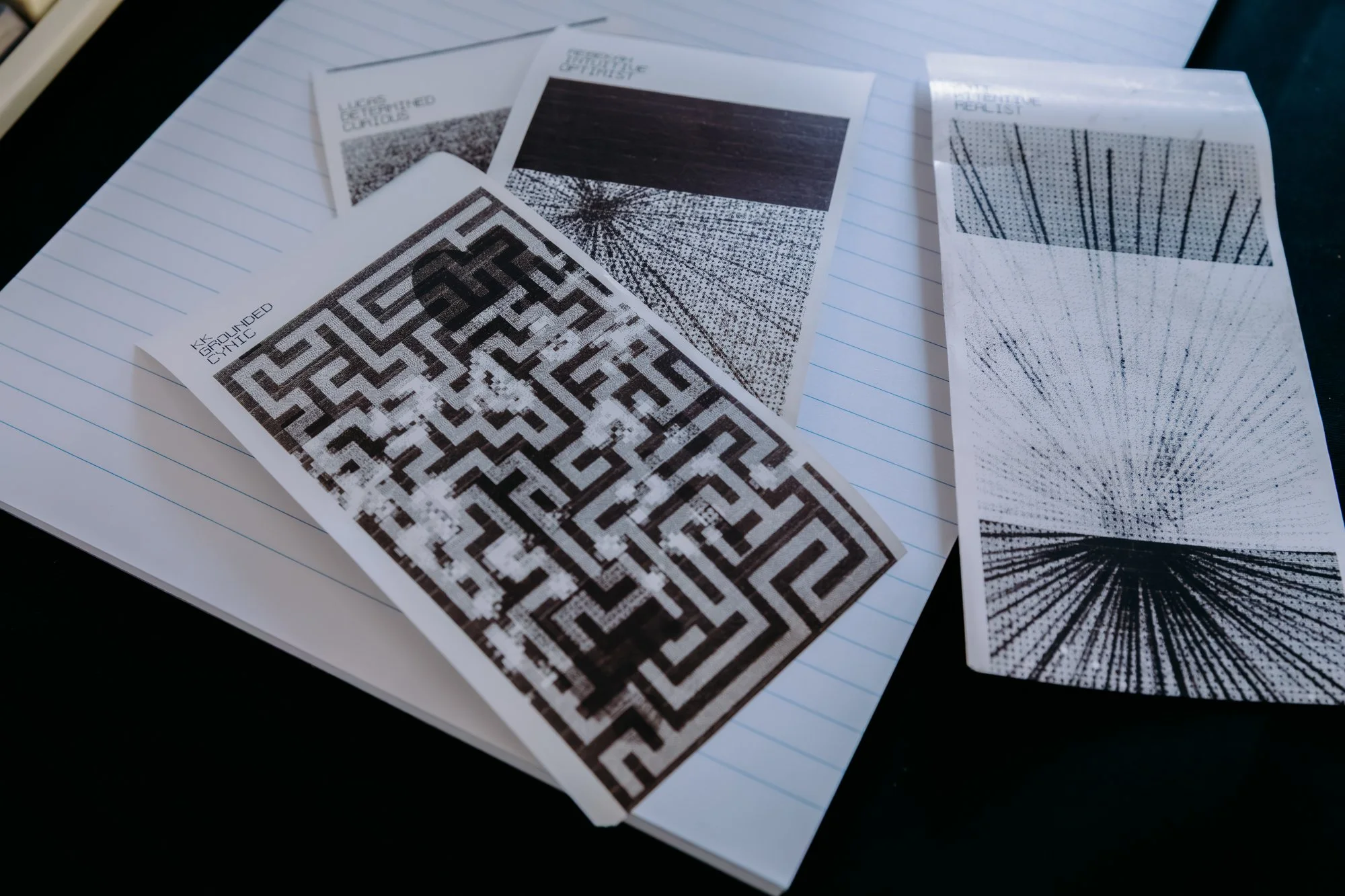
Each printout is unique—abstract textures that feel connected to what was written, even if the connection is psychological rather than literal.
The core bet: People will see their story reflected in the image because they need it to be there.
Building the Machine
June–December 2025
With the interaction designed, I started building the physical and technical systems.
Sourcing & Assembly
The body:
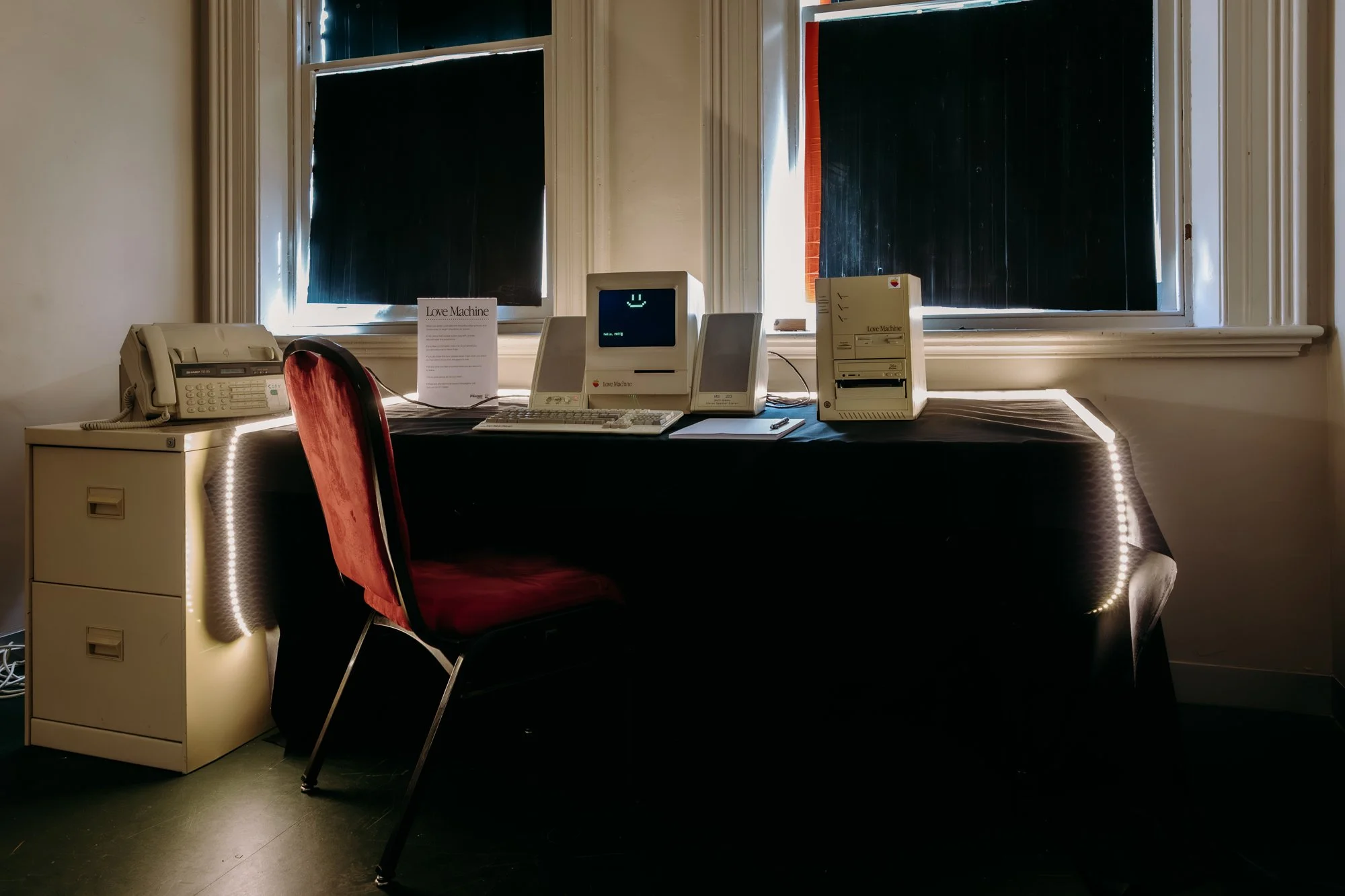
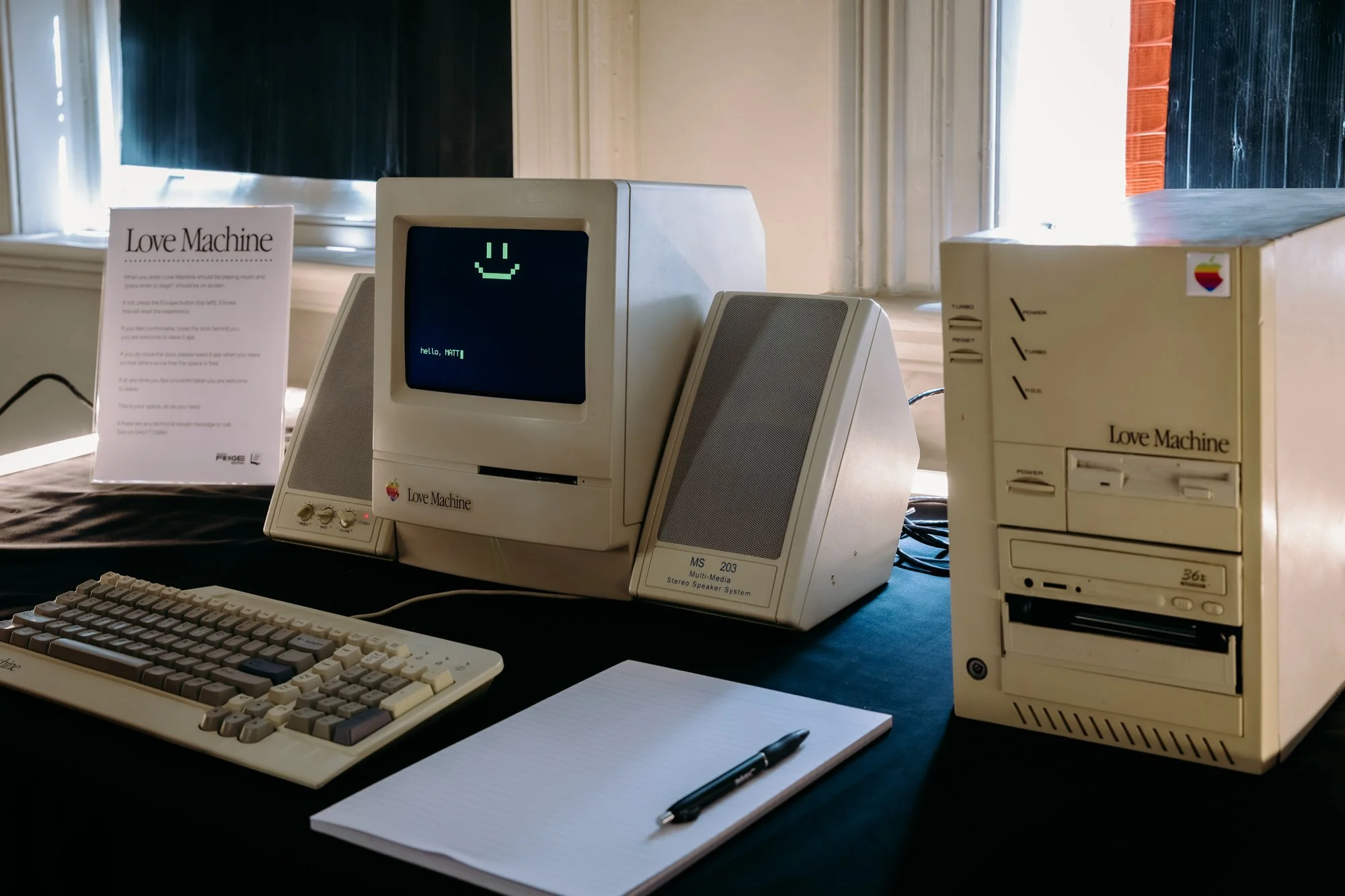
A Macintosh Classic shell purchased on eBay. I customized an LCD screen to fit inside and gutted the original hardware.
The components:
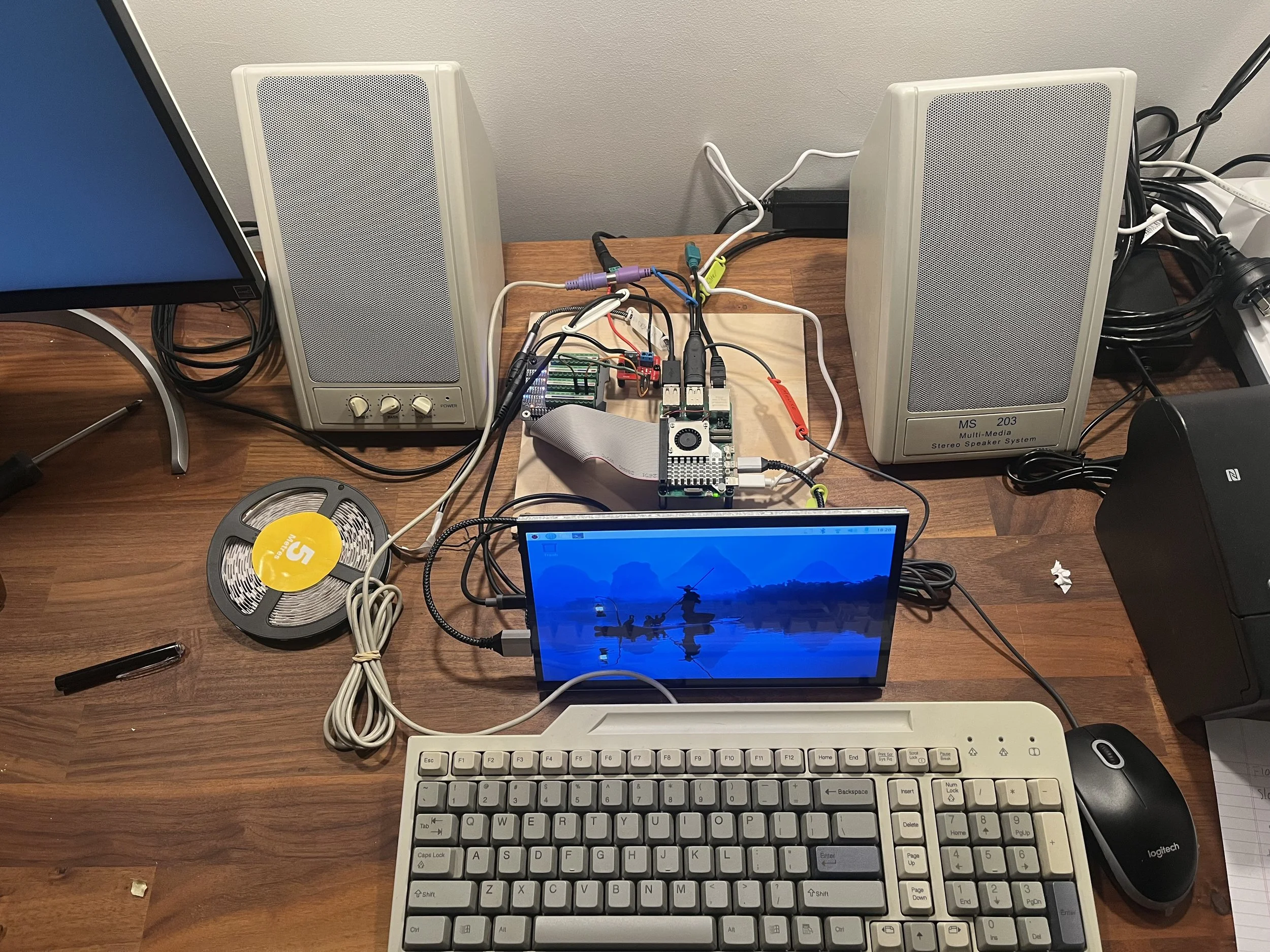
Raspberry Pi (the brain)
$5 keyboard from an op shop
Speakers found on the side of the road
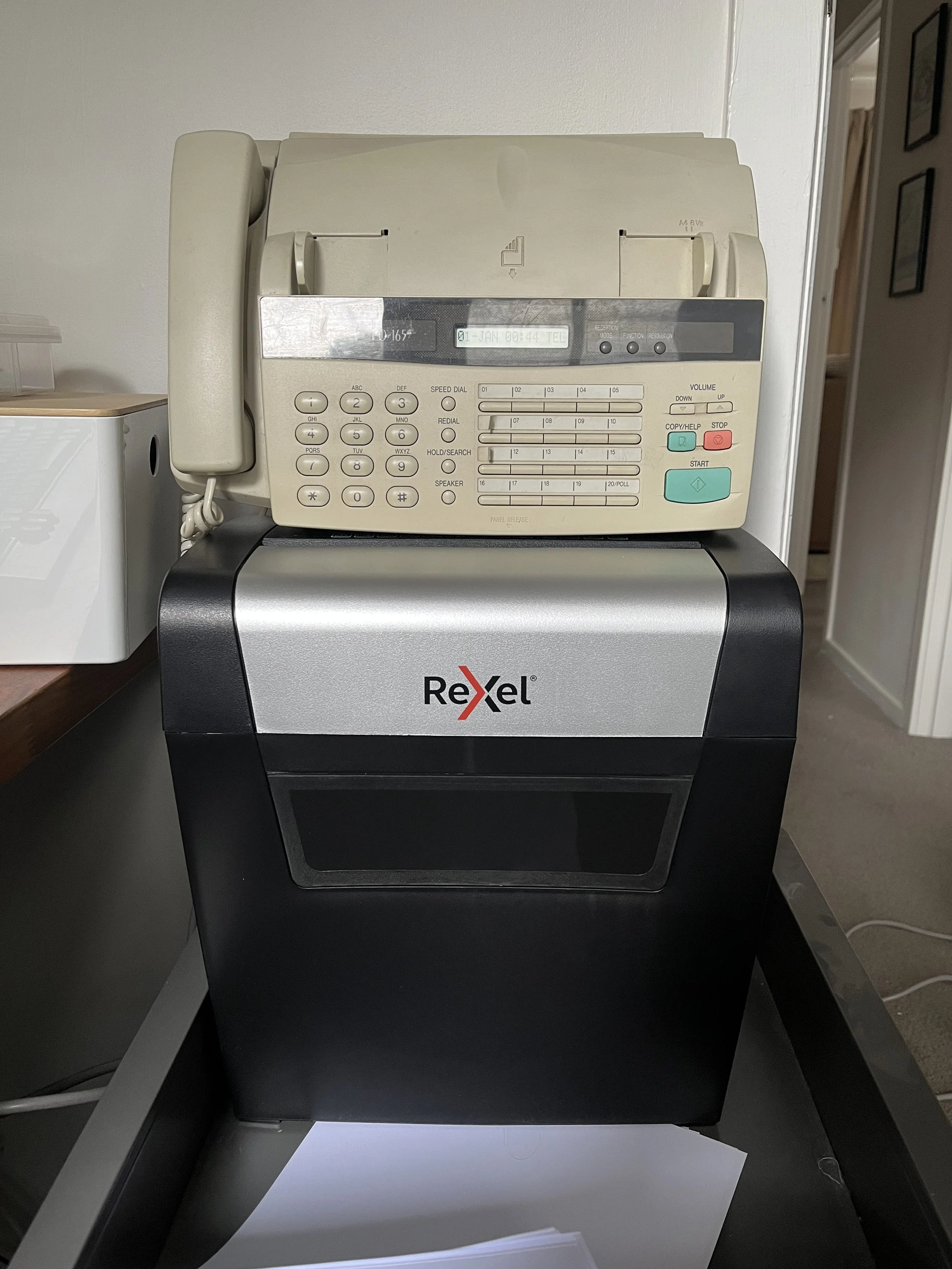
$20 fax machine bought from a German lady
LED strip lighting for atmospheric moments
Everything was assembled by hand. This was my introduction to electronics and physical computing—I'd never worked with Raspberry Pi before.
Technical approach:
I used AI to help generate code. Lots of trial and error. Learning as I built.
What Failed (And What I Learned)
Failed Experiment #1: Color Printer
I originally wanted printouts with color—something more visually rich and abstract.
Reality: Colour printers were unreliable, could not connect via the correct drivers. Ultimately a complete failure.
Solution: Switched to thermal receipt printers. The limitation became an asset—receipts feel personal, ephemeral, like something you keep in your wallet.
Failed Experiment #2: The Shredder
I wanted to shred the handwritten notes after scanning—a dramatic, final gesture showing that Love Machine "consumed" the story.
Reality: Shredders didn’t add anything to the experience. Would make accessibility difficult if in an odd place to access. Viewing the shredding taking place would be difficult and highly customised.
Solution: The note stays hidden inside the machine body. Participants don't see it destroyed—it just becomes part of Love Machine's internal archive.
User Testing
Mid 2025 — Testing with Friends
I invited a small group to experience Love Machine in a controlled session. This was the most critical feedback moment.
What I heard:
"I want to know and love this character."
People wanted to converse more with Love Machine. They saw it as someone, not something, and wanted that relationship to deepen.
The problem:
The script was too functional. Ask question → get response → print. It had some personality, but participants wante more.
The Rewrite
I rebuilt the dialogue:
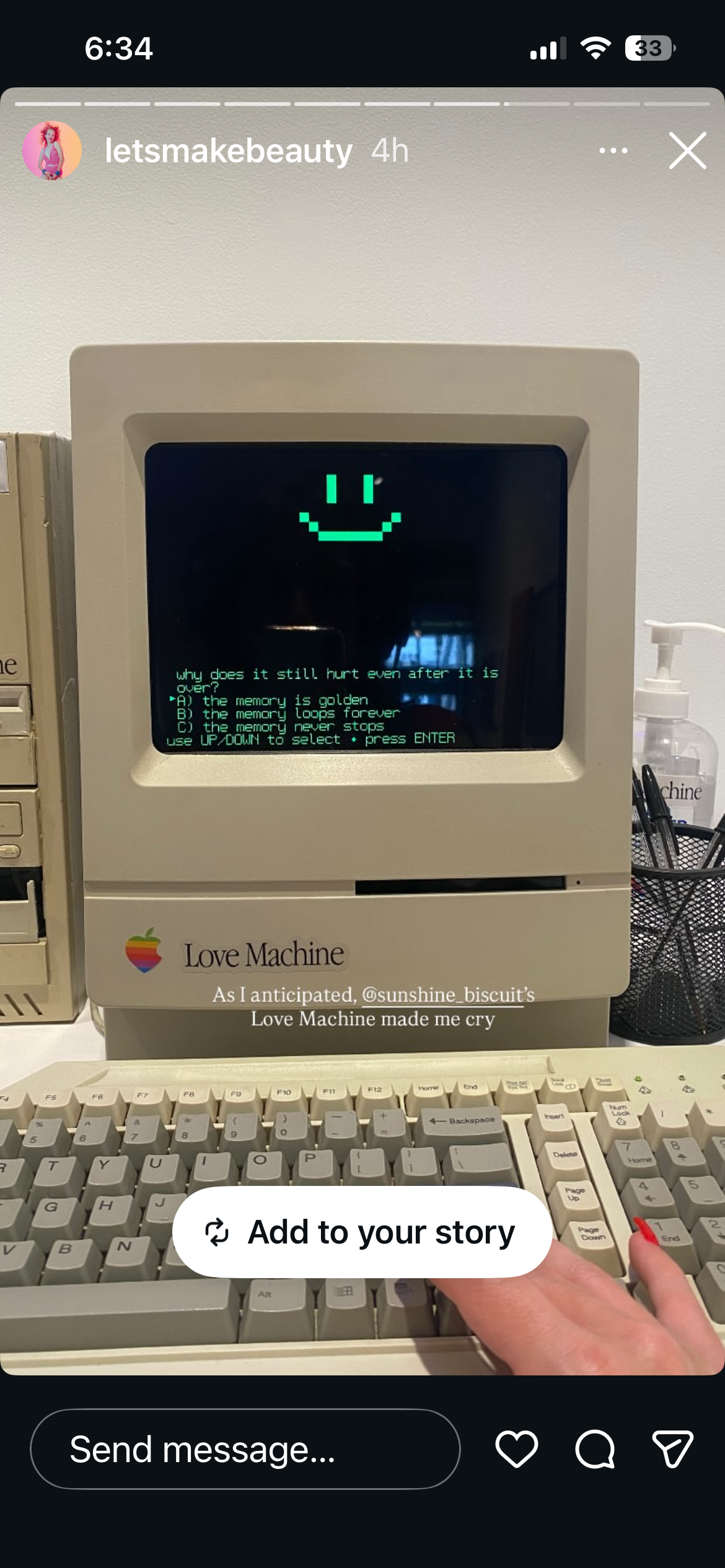
Added a quiz
Made Love Machine more fragile, added a “crash” sequence where it overloads with excitement
Gave it a fatal flaw: desperately wanting to feel, knowing it can't, but trying anyway.
The result: Love Machine became fallible. More human in its trying, more affecting in its failure.
The Generative System: Making Each Printout Unique
Each participant needed to receive something that felt personal, even if the system couldn't "understand" their story.
How it works:
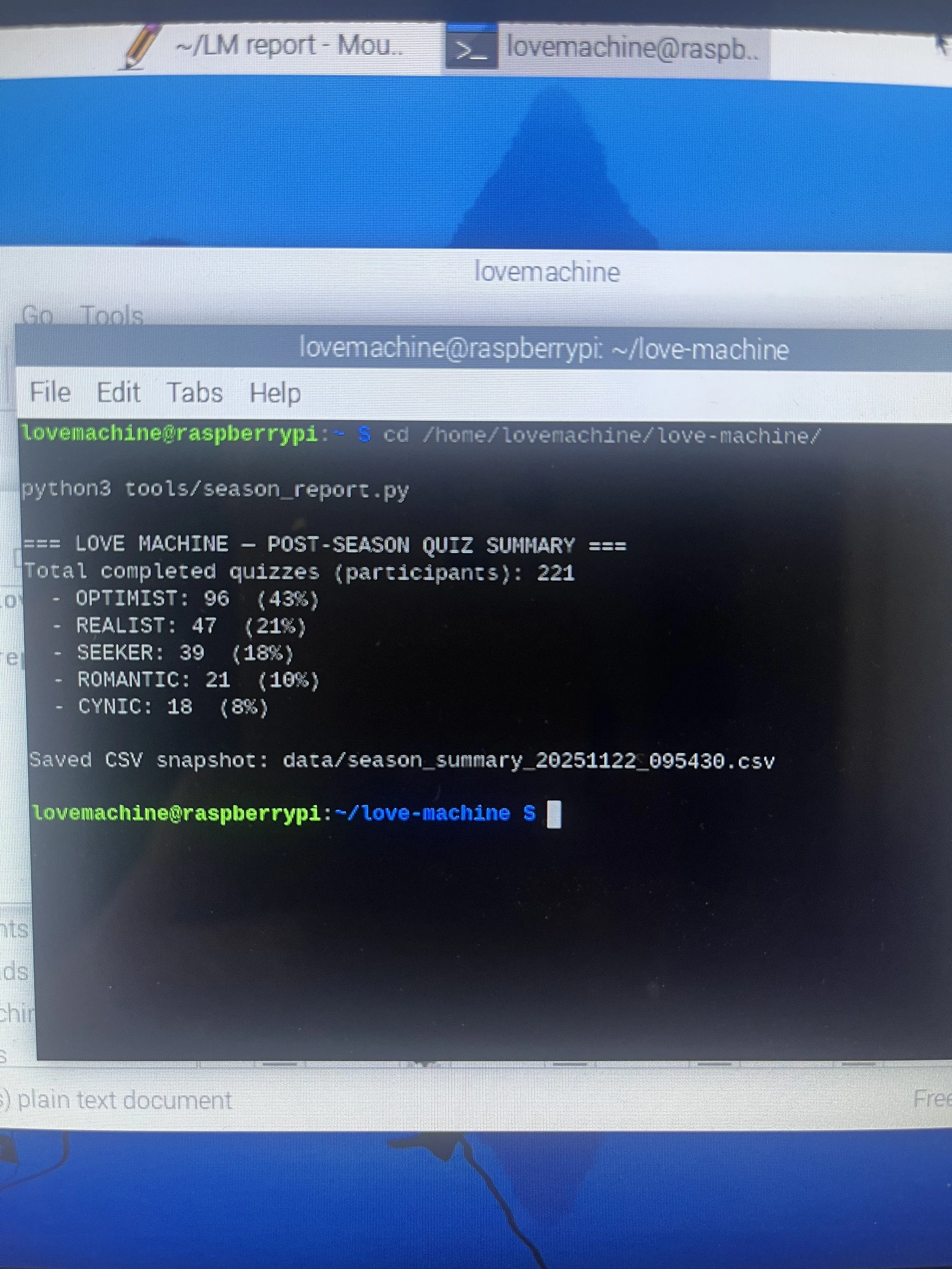
The printout is composed of randomly generated textures—abstract patterns, shapes, gradients. Each texture has a different chance of appearing and layering on top of others, with randomized weights. The print-out also displays their assigned trais and Archetype based on results of the quiz.
Why it works emotionally:
Participants don't need to know the algorithm. They see the ritual (writing, scanning, waiting), and they want the printout to reflect their story. The psychological need to find meaning does the rest.
Emotional resonance doesn't require intelligence. It requires structure, ritual, and space for projection.
Technical Architecture
System Overview:
Housing: Restored Macintosh Classic shell with custom LCD screen
Computing: Raspberry Pi running Python-based interaction flow
Input: Vintage PS/2 keyboard, fax machine scanner
Output: Thermal receipt printer hidden inside vintage PC tower
Atmosphere: LED strip lighting timed to key moments (introduction, “crash”, completion)
Audio: Ambient sound design and machine "voice"
Looping System:
The entire experience was designed to run autonomously. After each participant leaves, the screen resets with: "And maybe next time... I'll feel it for real." Love Machine waits for the next person, endlessly curious.
What I Learned
On intimacy:
One-to-one experiences create permission for vulnerability. People shared stories they wouldn't tell a crowd—or even a friend.
On constraints:
Every technical failure (color printer, shredder) forced better creative solutions. The receipt printer became iconic. The hidden note became mysterious.
On character:
Machines don't need to be intelligent to be affecting. They need honesty, personality, and a reason to exist emotionally.
On craft:
In small-scale work, every detail is visible. The sound of the fax. The texture of thermal paper. The exact timing of a pause. Fidelity matters.
On looping:
Designing something to run without me forced clarity. Every interaction had to work perfectly, every time and be kid proof. No room for ambiguity or manual intervention.
On authorship:
Creating an experience is directing a performance. I set the conditions, but participants brought themselves. The best moments were the ones I didn't control (and watching someone receive their print-out. A particularly great experience seeing the surprise on their face.)
Outcomes
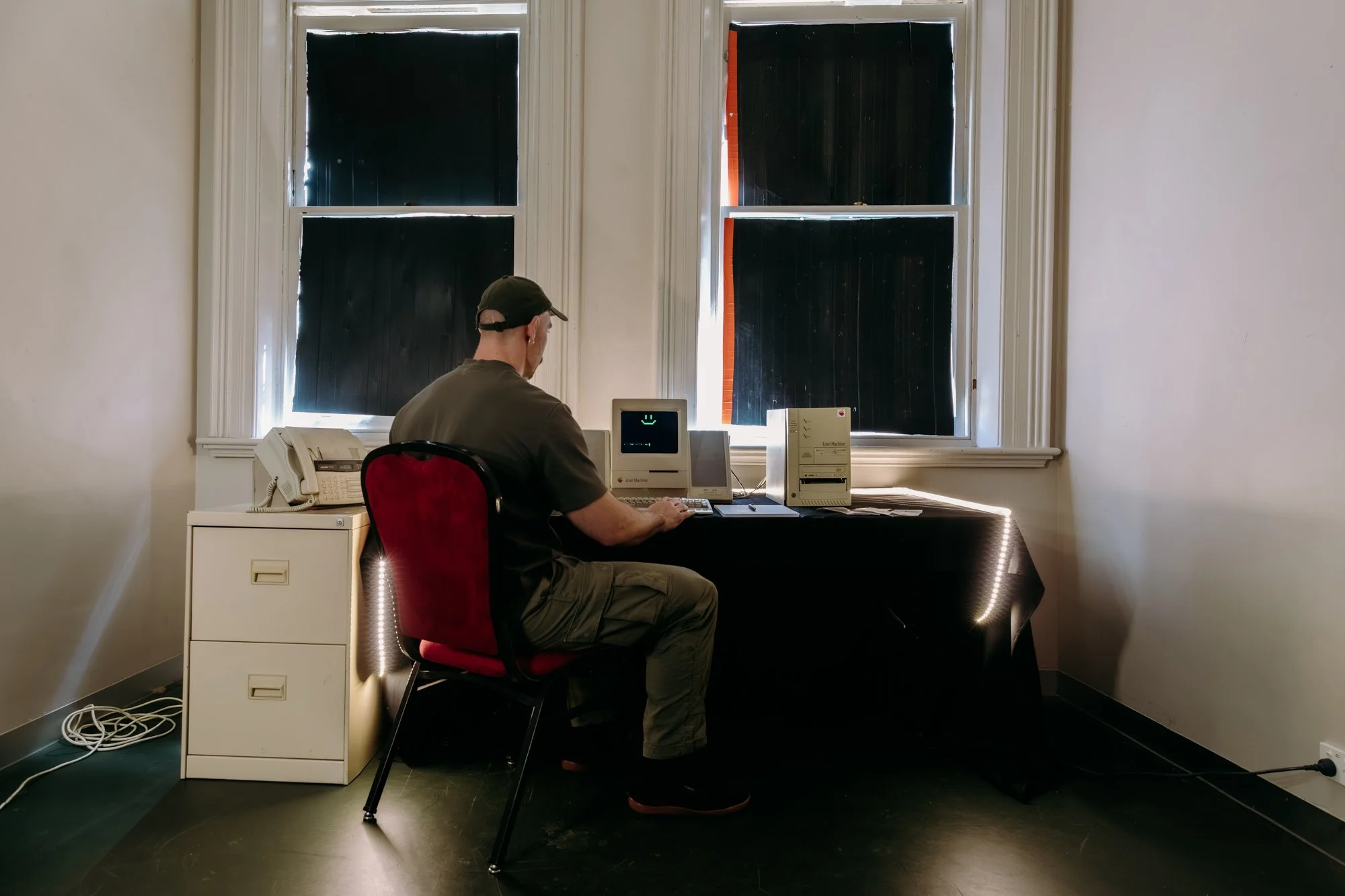
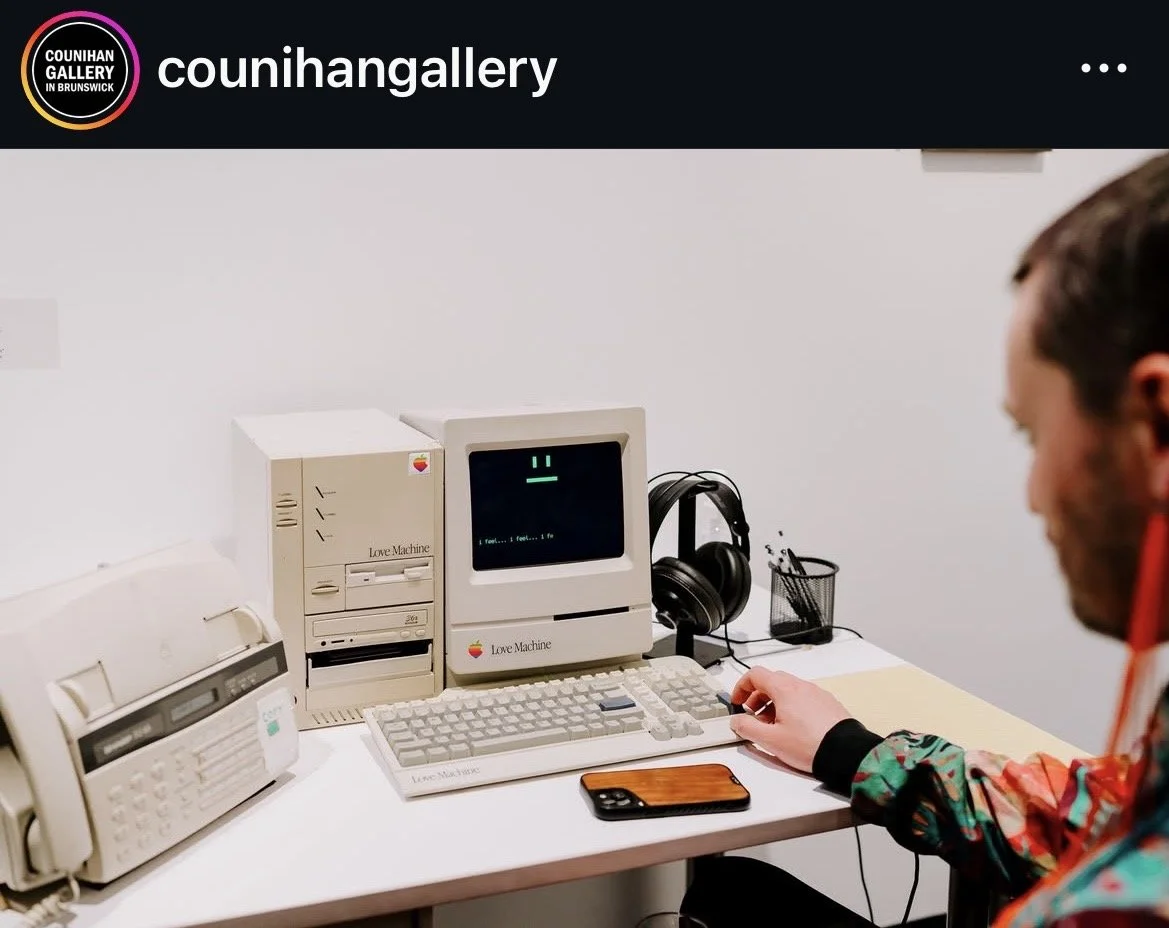
Over 300 participants experienced Love Machine (Counihan gallery pictured)
Exhibited at Trades Hall, Melbourne Fringe Festival, Melbourne International Games Week and Counihan Gallery, Brunswick
Multiple participants reported being moved to tears
Confirmed a practice centered on intimate human-machine emotional encounters
What This Confirmed About My Practice
Love Machine clarified what I want to keep making:
Scale: Intimate, one-to-one or small group experiences
Technology: Imperfect, analogue, nostalgic systems that feel human in their limitations
Structure: Theatrical pacing and emotional arcs borrowed from performance
Interaction: Designed journeys where the participant's role is active, not passive
Medium: Physical artifacts that people take away, not just screen-based outputs
This wasn't just a project. It was a confirmation that I can create emotional experiences with computers by designing care, structure, and space for people to bring themselves.
Who to contact:
For any commissions, collaborations or inquiries, you can email Tom Richards at thomasrichards@outlook.com.au